A Poem for Fathers

I’ve been thinking of my father all day, after writing about him last night.  This evening a poem came to mind that I haven’t read or thought of in many years, but which is worth sharing:

Those Winter Sundays

Robert Hayden – 1913-1980

Sundays too my father got up early
and put his clothes on in the blueblack cold,
then with cracked hands that ached
from labor in the weekday weather made
banked fires blaze. No one ever thanked him.

I’d wake and hear the cold splintering, breaking.
When the rooms were warm, he’d call,
and slowly I would rise and dress,
fearing the chronic angers of that house,

Speaking indifferently to him,
who had driven out the cold
and polished my good shoes as well.
What did I know, what did I know
of love’s austere and lonely offices?

Captain, My Captain

It is right and good, on Veterans Day, to honor all men and women who have served.  And so I do, sincerely.  But today my thoughts have been on one man: Captain Lawrence Edward Selden, USAF.  My father.

Dad went into the Air Force soon after my birth in 1956.  My first years were spent in simple and drab base housing in Greenville, MS.  Greenville was a flight training base.  As an Air Force doctor, Dad was tasked with treating everyone on the base, especially the many new pilots whose crash rate was high and whose injuries – if they lived – could be appalling.

After his service, Dad chose to move to a small town in a rural county in central Texas.  He spent the next 25 years caring for the poor, the sick, the injured, the dying.  When a patient could not pay, Dad took no payment. 

He was an old-fashioned family doctor.  Through all the years of my boyhood, he made housecalls at all hours of the night.  He missed holidays with us, missed workday and weekend nights at home, and missed more sleep than any one man should have to miss.  Even when sick himself, went to help those who were sicker when they needed him. 

In the most mundane ways, I am still shaped by his life.  To this day I don’t care to eat dinner until 7 p.m.; that’s when we ate when I was growing up, because Dad could rarely get home before then.  I can wake to phone calls in the middle of the night, then fall quickly back to sleep.

After my brothers and I left home, he moved to a remote and forsaken Indian reservation in northern Montana and helped the very poor and sick there.  When we were boys he often said he would do that someday, but we never believed him.  That was something else about Dad: he fulfilled his promises.

And when he grew tired of the raw Montana winters, he moved back to Texas to practice in a barrio clinic in San Antonio, caring for the indigent who had no place else to go.  He carried on into his 70s.  He finally enjoyed a few years of a simple retirement before dying on Christmas day, 2007.

If Dad ever complained, I never heard it.  If he ever flagged, I never saw it.  If he ever wavered in his commitment to others who needed him…well, he simply never did.  Having grown up desperately poor himself, he gave his life to caring for those whose troubles and want he knew all too well.

A strong man, he gave his strength to help the weak.  A kind man, he ministered to those whose lives knew little of kindness.  A man with a gift for healing, he healed others.

If I had to craft a description of an honorable soldier, that would be it.

Come this Christmas morning, twelve years will have passed since he did.  I miss him, terribly sometimes, achingly.  I still dream of him, and once or twice a year I wake in the middle of the night, thinking I’ve heard his voice and his steps through the house as he leaves in the darkness to help someone who needs him.

So tonight, Dad – my namesake, my father, my hero – I salute and honor you, the most honorable man I have ever known.

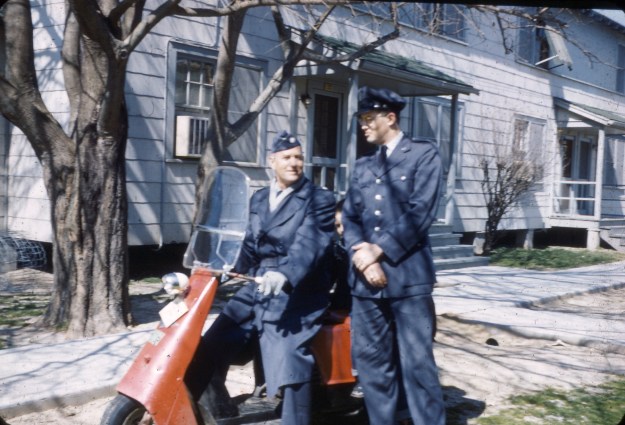
Larry in Capt. uniform w Col. Thaxton on scooter

My father (standing), Greenville, MS, 1957

Of Birds and Days

One of the joys on Galveston Bay at the onset of fall and the coming of winter is the arrival of great numbers of migratory waterfowl.  They augment our already numerous resident birds, so that, to the careful observer, our days are alive with many species flying, floating and perching anywhere the eye may look.

Our dominant southerly winds abate, also, and with the occasional north wind our tides are lower.  This leaves more beach exposed next to my house, drawing wading birds in.  Just yesterday three sandpipers were feeding there.  (See video below.)

(If you are a fan of collective nouns, as I am, you know that none are more colorful and quirky than those given to birds.  A group of sandpipers is…a fling!)

This afternoon, attending a Veteran’s Day ceremony with neighbor Chris, we spotted what we thought was a raft of ducks, but when he zoomed in on them with his magnificent camera (Chris is a profoundly talented professional photographer) we saw that it was a raft of a dozen or so Hooded Mergansers – the first I have seen here.

And above them flew an osprey with a large fish in its talons.  Chris captured a sequence of brilliant photos of it as it flew over us.

A few times this past week I have spotted a pair of kingfishers on my pier; this is a rare blessing, since they usually prefer more protected water.

May I never take these blessings for granted.  May their memories never fade from me.

William Cullen Bryant wrote a worthy poem on the subject:

To a Waterfowl

Whither, ‘midst falling dew,

While glow the heavens with the last steps of day,

Far, through their rosy depths, dost thou pursue

Thy solitary way?

  Vainly the fowler’s eye

Might mark thy distant flight, to do thee wrong,

As, darkly seen against the crimson sky,

Thy figure floats along.

Seek’st thou the plashy brink

Of weedy lake, or marge of river wide,

Or where the rocking billows rise and sink

On the chaféd ocean side?

There is a Power, whose care

Teaches thy way along that pathless coast,—

The desert and illimitable air

Lone wandering, but not lost.

  All day thy wings have fanned,

At that far height, the cold thin atmosphere;

Yet stoop not, weary, to the welcome land,

Though the dark night is near.

  And soon that toil shall end,

Soon shalt thou find a summer home, and rest,

And scream among thy fellows; reeds shall bend,

Soon, o’er thy sheltered nest.

Thou’rt gone, the abyss of heaven

Hath swallowed up thy form, yet, on my heart

Deeply hath sunk the lesson thou hast given,

And shall not soon depart.

He, who, from zone to zone,

Guides through the boundless sky thy certain flight,

In the long way that I must trace alone,

Will lead my steps aright.

 

I Don’t Want to Share This, But I Must

Please bear with me, my friends.  I have an important point to make here, but a lengthy prelude is required to get there.  I hope you find it worth the time.

 I don’t speak often of my religious faith or beliefs.  They are private and personal to me:deeply held and valued, but private and my own.  Like my political principles, I prefer not to share them unless they are threatened, or unless I feel that I and my fellow believers are unfairly maligned.  And occasionally I will speak of my faith when I believe that my ‘co-religionists’ are misbehaving or just plain wrong.

 I was raised in a very small Presbyterian church, in a rural Texas community in which everybody was assumed to be Christian, with little distinguishing our denominational choices other than hymn preferences and dinner-on-the-ground BBQ recipes.  During my college years I learned of and became fascinated by other religions and ways of interpreting our spiritual nature.  I can’t say that I overtly abandoned Christianity, but I certainly laid it aside.  Of special attraction was Zen Buddhism, which lead me to spend two years studying the Japanese language – only my penury keeping from a semester in Japan – and whose influence I flouted openly, to the mild and patient dismay of my parents.

 For many years after that I simply disregarded the faith of my youth.  Christianity seemed worn out, plain, provincial – all the things I hoped to leave behind once I was free to live in the world beyond my insular boyhood.  A few months after finishing college I began working on ocean-going ships, visiting and learning of other countries and peoples.  A far vaster world opened to me than I ever imagined existed.

 For many years I floated around – professionally and spiritually – feeling no compunction to believe in anything in particular.  But for reasons I no longer remember, I began reading the Bible again in my 40s.  (Not coincidentally, the same time I began re-evaluating my leftist political beliefs.)  I came back to it with suspicion and doubt, but I remember thinking that I was ready to examine my inherited faith on new terms, to see if there was any value it; if I couldn’t find any, I could comfortably set it aside forever.  I wasn’t searching for anything; I read with an exegetical scrutiny, not a longing to fill some kind of spiritual void.  And I quite expected to be disappointed.

 I began with the New Testament.  Matthew in the lead-off spot, the scholarly chronicler.  Sure, the Sermon on the Mount seemed admirable – what’s not to agree with there?  But nothing particularly moved me. 

 Then I came to Matthew, chapter 22.  There we are told that Jesus was asked by a young man to declare what is “the most important commandment” of all.  Exactly what I wanted to know!  What the heck is God like, and what does a god really want from us?  Distill everything down to it’s most germane essence.  And Jesus answered with these two astonishingly profound and simple instructions:  “Love the Lord your God with all your heart, soul and mind…” and “love others as much as you love yourself.” 

 That was it.  No other nuances or caveats.  When Jesus was cornered into nailing it all down – kind of a Christianity for Dummies nutshell – he said nothing about sacrifices, worship practices, sects or observances; nothing about diet or witnessing, nothing about race or creed or sex or righteousness or sinfulness; nothing about chosen people or outcast people; nothing, even, about right or wrong.  Two things, and two things only, did God hope from us: to love God and to love others. 

 I was struck by that passage as I have never before or since been struck by anything I’ve read.  If I could believe that a God existed, and if I could imagine anything that a God would hope for from us, this would be it.  I could not believe in anything more true to the spirit of a divine and perfect being than such a desire.  And I remember thinking that that is the only kind of God who would bother to put up with us, and the only kind I would hope to live with and put my faith in.

 That began a slow and cautious return to my own peculiar Christian faith.  I knew that I could believe in someone who said such a thing; that I could hope to be made better by following someone who said such a thing.  But I returned to it this time without influence, without church or pastor, without creed or denomination.  I didn’t then, nor do I now attend a church.  I don’t read religious books, and I care not a whit for the interpretations of others.  I am what I call a “red letter” Christian, after the old practice of highlighting the words of Jesus in red text, to distinguish them from what others have to say.

 So why do I write this?  Why would I share all this, since the subject itself is one I keep carefully to myself and which I find mildly embarrassing to share?

 I do so for a dear friend, whose child is sexually evolving and who may sometimes think that Christians will condemn this child she loves and who is struggling herself to understand.  To let her know that most of us are not that way.  We will love her and her child without reservation.  If we are true to the person who founded our faith, we must be true to what he said and what he asked of us.

 We must remember this: Jesus said “love others as much as you love yourself.”  Period.  He did not say to love other straight people, or other Christians, or others of your own race or faith or behavior or social class.  He tacked on no caveats, no disclaimers, no exceptions, no exclusions.  God excludes no one from His love.  If He does not, how dare we?

 I understand that other passages in the Bible condemn or disparage homosexuality or ‘alternate’ behaviors or choices we make (I don’t know what they are, and I don’t care).  They were not said by Jesus.  That is the point I was trying to make about being a “red letter” Christian.  Anything I read or am told that contradicts what Jesus said, I cannot hold to be true.  If the apostle Paul or anybody else said something else…well, as I once wrote about gay marriage, I am a Christian, not a Paulian.  (I am also a civil libertarian, but that’s a story for another day…)

 When I read or hear someone – Christian or not– who condemns others for any reason – for being gay, for being of a different race, even for being other than a Christian – I recoil in pain and sadness.  One joy of following Christ is having been given the clearest, most direct and precise guide for how God hopes we shall treat others – all living beings, poor and ornery as ourselves.  We disobey those instructions at the peril of disappointing God.

 I do not know how else to believe.  I don’t claim to live up to my beliefs very often, to what Christ asked of us – I am a deeply and habitually flawed man in an abundance of ways – but I still hold them up as what I hope to be.  I have never found anything more true, or more worthy of clinging to as truth than what Jesus said in those two simple sentences.  And I most passionately hope all other Christians believe the same.

Milton Meets the (younger) Kittens

“There is no better way to thank God for your sight than by giving a helping hand to someone in the dark.” Helen Keller

 Blind Milton came to live with me a week ago.  In that time he has astonished me with his intelligence, the quickness with which he learns his environment, and his pure joy for living.  I have learned much by watching him.  He brightens my days.

 Today the sutures from his entropion surgery were removed.  Dr. Parker confirmed that he was born with Microphthalmia – small, undeveloped eyeballs and ocular tissue – and will never gain any sight, though his entropion has been cured.  He doesn’t mind at all, so I certainly won’t. 

 I moved the three neonate kittens into the bathroom next to his room.  They enjoy playing paw-tag under the door.  Three times now I have let them out together to play (see video below).  Milton seems to think they are moving toys, but most of the time he is gentle with them.  The kittens are as tough and fearless as Milton, despite being only five weeks old – Milton is only 3.5 months himself.  Milton can become overwhelmed, however, and I have to break things up if he gets a bit rough.  New and moving objects can bewilder him, disrupting the world he struggles to map.  I believe he will become gentler over time.


On Laws Deserving My Dismissal

Now one month shy of 63 years on this earth and as a citizen of the United States, I am proud of following the laws of this country, and of carrying my weight through paying – since the age of 16 – a small fortune in taxes.  I have taken not one penny in government assistance, even during the years when I struggled financially.  For many years I have tithed to a variety of wonderful charities – a tenth or more of my gross income that, had I chosen a more selfish path, could probably have made retirement available to me by now.  Never having put a child through schools, I have nonetheless paid for many other people’s children to do so.

 I do not plan to change.  God willing, I will be able to make the same claim with my last breath.

 That said, some impositions of the various layers of the ruling state are sticking in my craw.  And some, I have decided after serious reasoning, I will no longer obey.  Some are not worthy of being obeyed.  Among those are the insignificant.  For example, the city where I have lived for 24 years permits residents to own no more than six pets.  I now have ten permanent cats, and three temporary kittens that I have bottle fed for the last 2.5 weeks.  I don’t just disregard this law, I choose to deliberately and public flaunt it.  I recognize no government’s authority or expertise in determining how many animals I may care for.  I am more than capable of caring for all my cats, and from keeping them from being public nuisances.

 Another law which I plan to soon break is the prohibition against distilling spirits for personal use.  The federal government has a law against this.  In their fealty to big-money distillers, they allow exceptions through expensive and time-consuming licensing.

 I take pleasure in doing things for myself.  And I take pleasure in good whiskey, which is not cheap.  So I’ve decided to make my own.  I do not want to sell it or give it to others.  The risks are small and easily avoided – and anyway, I don’t need any government to safeguard me from life’s risks.

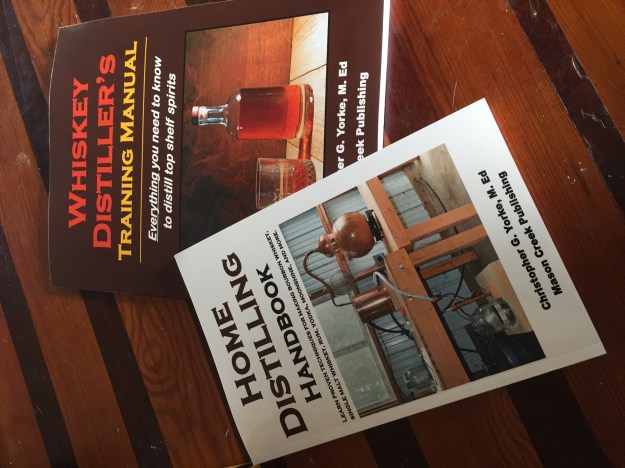
 So I am studying the art of distilling whiskey, and will buy the still and other materials soon.  I look forward to that satisfaction.  The government – and Facebook, which apparently banned a post I made on this subject – may go jump in the nearest lake.

whiskey books

Old Coots

Our coots are home!  At dawn today I saw the first large raft of coots of the fall.  They are back for the winter, and I welcome them with a happy spirit.

Of the vast diversity of birds here, migratory or resident, none is more plain or humble.  Neighbors and I will spend weeks in fall anticipating the return of the grand white pelicans, but we never speak of coots.  But I like them very much; they are my kind of bird: common, unpretentious, simple.  The pelicans dazzle me, but I feel at home with coots.

That thought occurred to me several years ago when it was time to write my annual Christmas letter.  Our coots seemed a fitting subject for the season.  So I thought I would share that letter.  My feelings about our plain friends hasn’t changed.

Christmas, 2011

Dear Friends,

“What a crazy old heron.”  “He’s a mean old sandpiper.”  “You’re turning into a crusty old roseate spoonbill.”

None of those sentences really makes sense, do they?  (The last one is just silly – I just like to use the name ‘roseate spoonbill’ whenever I can.)  But call someone an “old coot” and there’s no mistaking what is meant:  mean-spirited, misanthropic, intemperate…even downright ornery.

No one knows the origins of the phrase.  Why choose coots to describe ornery people?  Perhaps because they could not be less flashy or attractive; no less inspiring bird exists.  The American Coot is one of the most common waterfowl in all of North American:  found in 50 states, sometimes in ‘rafts’ of 1500 birds; plain in appearance; awkward in flight and walk (“spalatterer” is one nickname for the coot, for their ungraceful attempts to rise into flight).  One observer bluntly describes them as “unloved and unlovely aquatic birds…a truly ugly and awkward bird, and virtually inedible to most people.”  (Though Cajuns, who call them ‘poule d’eau’ – water chickens – are known to include them in gumbo.) 

Perhaps the name itself suits a pejorative.  Clipped and crude in its monosyllabic, Anglo-Saxon earthiness, ‘coot’ does not ring with music or rhythm.  Other aquatic birds similar in size and habits bear names that would fit just fine in a poem by Keats or Wordsworth: Golden Plover, Avocet, Little Curlew, Red Phalarope.  The Romantic poets never wrote an “Ode to a Coot.” 

Nor are they musical themselves.  Ornithologist John Tveten, author of “Birds of Texas,” describes coot calls as “a variety of clucks, cackles, grunts, and other harsh notes, some rather eerie.”

Is there any wonder then, that, if we must use a bird to describe dotty or mean people, we would settle on the coot?  There seems to be little about the species to recommend it for any higher purpose.

But I really must object.  For all their Quaker plainness and cackling grunts, I love these little birds.  They are daily winter companions, bobbing along the shore with a constancy more true than any other bird.  Like old chairs, they fill space with familiar comfort, but don’t distract us from all the more important things we clutter our lives with.  They endear themselves to me by their simple faithful presence.

They are tolerant of humans, even open to friendship with us.  I’ve read many accounts of bonds formed between coots and people.  A woman in San Diego where, as here, coots migrate in winter, writes of a years-long friendship with coots:

“I keep Cheezit crackers in my pocket and give the coots a few crumbs. If you hand feed them every day so that they can clearly see your face, coots will form lifelong bonds with people. It is always gratifying to have old friends come running up to me in the fall when I haven’t seen them for six months.”

Others note that coots recognize individual human faces, and they readily ‘flock up’ with people for safety and companionship, as they will do with almost any species that will tolerate them.

 And lastly, though certainly not least of all, the plain old coot was among the first birds to return with us to our scarred shores after the hurricane that battered our town three years ago.  Through that first dark winter of recovery, they were with us every day, small feathered tidings of comfort and joy.

And still more than that:  they offer a chance to test our capacity for mercy.  For all our crassness and knavery, every kind human heart reserves one of its best rooms for all the ugly, bumbling, humble creatures that fill our world – those who will never glide untroubled through the world thanks to the random gifts of beauty, grace or song.  I don’t hold my breath when I see coots, but I always smile.

We love coots with a sincerity we can’t quite muster for their more lovely, blessed kin.  That we do so is rare evidence that some residual of God still breathes in the human spirit.  If coots could ponder such things, I believe they would be grateful that, rather than being admired, they are loved. 

So from this old coot to you, best wishes for a joyous Christmas.

coot

Fulica americana, the American Coot