
Author Archives: Eddie Selden

Open Carry Returns to Texas

The new Texas open carry law went into effect as of yesterday, January 1, 2016.  If you don’t know this, you haven’t paid attention to the news. News coverage has been more widespread than for any recent state-level gun law that I can remember, with every major media outlet, print and broadcast, carrying stories on the law.

Many reports express breathless worry for public safety, citizens being “uncomfortable” at the sight of a holstered handgun, or increases in crime.  NBC News, for example, exclaims that the “Controversial Open Carry Texas Gun Law Divides State.”  (This is foolish and meaningless on its face; what meaningful law does not “divide” some portion of the population effected.)

Texas is now the 45th state to allow open carry of handguns – a steep majority indeed.  In other words, only five states (California, Florida, New York, Illinois and South Carolina) do not allow the practice.  With 44 states already allowing open carry, is it such big news that a 45th has done so?  Some states provide for “constitutional carry,” i.e., open and concealed carry without a state license.  So why the fuss over Texas?  From the news stories themselves, the concern is simply over the fact that Texas is now the most populous state to allow open carry.

I’ve got news for them all: not one single Texan who was not allowed to carry a gun on December 31 will be allowed to do so on January 1.  The number of citizens licensed to carry did not increase by the law’s passing or its implementation.  The law allows only those who possess a valid Texas concealed handgun license (CHL) to carry openly, and then only in a belt or shoulder holster.  (According to the Houston Chronicle, only 4% of the Texas population holds a CHL.)  If you see someone carrying a handgun openly today, odds are high that that person was carrying a handgun before Saturday, only not openly.  Armed all the same.

Another reason the attention is foolish: according to crime details from the Texas Department of Public Safety (latest statistics are from 2013), Texans holding CHLs commit violent, gun-related crimes at remarkably low rates.  Anyone wishing to be safe would, by the evidence, wish to be in the company of licensed gun carriers.

As someone who has had a CHL for years, and often carries concealed, I can attest that my reasons for carrying have not changed.  I do not feel more aggressive or violent; indeed, I feel the same hope for peace and goodwill as I felt a few days ago.

I have spent much time in states that allow open carry, and have encountered and spoken with people carrying openly.  They have not frightened or threatened me at all.  In fact, I have found the practice rather encouraging, that such freedom still exists.  Even in states more pro-gun than Texas, such as Arizona, Wyoming and Montana, the practice is still uncommon.  I expect that will be the case in Texas, also.  Every CHL holder I have spoken with says they intend to continue carrying concealed in most situations; I expect to do the same.

Within a few weeks and months I further expect that the fear, trepidation and warnings will all prove unwarranted.  I felt the same last spring when the media were warning of violence, protests and anti-government riots prior to the Jade Helm military exercises.  (An acquaintance of mine foolishly claimed that Texans were exhibiting “mass hysteria” over JH.)  Nothing of the sort took place.  Texans are sensible, reasonable people.  We shall show those who doubt us, and those in states who seek to restrict gun ownership, that we are, as I often claim, more than responsible with our freedoms.  I am glad we elected a legislature which is beginning to act in such knowledge.
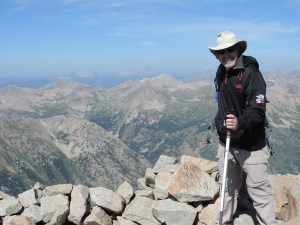
Goodbye to a gentle revolutionary

RIP, Irwin A. Schiff, patriot and revolutionary.  He refused to allow political conformity, the status quo, or the oppressive weight of prison, to corrupt his commitment to what he believed were the important founding ideals of this country.  From a eulogy written by his son, Peter, which should be read in its entirety:

“My father had a life-long love affair with our nation’s founding principals and proudly served his country during the Korean War…”

…….

“But my father was most known for his staunch opposition to the Federal Income Tax, for which the Federal Government labeled him a “tax protester.” But he had no objection to lawful, reasonable taxation. He was not an anarchist and believed that the state had an important, but limited role to play in market based economy.  He opposed the Federal Government’s illegal and unconstitutional enforcement and collection of the income tax. His first book on this topic (he authored six books in total) How Anyone Can Stop Paying Income Taxes, published in 1982, became a New York Times best seller. His last, The Federal Mafia; How the Government Illegally Imposes and Unlawfully Collects Income Taxes, the first of three editions published in 1992, became the only non-fiction and second-to-last book to be banned in America.”

……

“His crusade to force the government to obey the law earned him three prison sentences, the final one being a fourteen-year sentence that he began serving ten years ago, at the age of 77. That sentence turned into a life sentence, as my father failed to survive until his planned 2017 release date. However, in actuality, the life sentence amounted to a death sentence. My father died from skin cancer that went undiagnosed and untreated while he was in federal custody.”

……

“Whether or not you agree with my father’s views on the Federal Income Tax, or the manner by which it is collected, it’s hard to condone the way he was treated by our government. He held his convictions so sincerely and so passionately that he continued to espouse them until his dying breath. Like William Wallace in the final scene of Braveheart, an oppressive government may have succeeded in killing him, but they did not break his spirit. And that spirit will live on in his books, his videos, and in his children and grandchildren. Hopefully his legacy will one day help restore the lost freedoms he died trying to protect, finally allowing him to rest in peace.”

An October Afternoon, on Galveston Bay

As with many Texans, who sweat through long, hot summers, fall is my favorite season.  Afternoons are still very warm here, but the breeze has cooled, the light is softer, and afternoons are a delight.  Here is a montage of photos I took from my deck on this beautiful fall afternoon.  Am I blessed? Yes, every day.

Error
This video doesn’t exist

Why Forgiveness is the Most Difficult of Divine Instructions

I am a peaceful man.  I have struck only two people in my life, and only in self defense (I was much younger); I hope never to do so again.  But upon reading this story, about the “mastermind” of an elephant poaching ring, I found myself wishing that she be punished by having her teeth pulled one by one, and the skin of her face peeled off.  And in the face of all who demand that we respect all facets of other cultures, I say: “God damn the Chinese custom that tolerates and facilitates such barbarism.”

May God forgive me for such thoughts; and may God ensure my anger at such inhumanity never flags.

Another Rights-Abusing County Official

Madeline Singas (a Democrat), Acting District Attorney of Nassau County, NY, forbids Assistant District Attorneys (ADAs) working for her to own a handgun.  From the official employment application form, which is followed by a signature line:

“I understand that assistant district attorneys are not permitted to apply for a handgun permit nor own or possess a handgun while employed by the Nassau County District Attorney.”

In other words, as a condition of employment within the county DA’s office, ADAs may not so much as own a handgun at any time, at any place, for any reason.  The ban is not restricted to possession at the office, or courtroom, or any other place of official business (which could be reasonable; I do not allow guns in my office).  ADAs may not own one at all: not for personal defense away from a work setting; not for protection at home; not for sport; not for hobby collecting.  They may not so much as apply for a permit, even if they do not follow through with a handgun purchase.

Singas is up for election; perhaps this policy is red meat for the Democrat-leaning county.  She is an aggressive self-promoter.  (The official Web site of the DA office is a virtual political advertisement for her.) (1)  Perhaps this is strictly an ideological decision.  New York state has some of the most restrictive gun laws in the Union; in such a political environment, perhaps she simply believed that such an edict would pass without notice.

I do not deny Singas’ right to prohibit guns in a workplace she leads; she may legally do that.  But by what authority can she forbid an employee – as a condition of employment – from exercising, on personal time and in private environs, a right explicitly recognized by the U.S. Constitution?

Reading this story, I could not help but think of Kim Davis, she of gay-marriage-license-denial fame.  Davis – also a Democrat – has been exposed and condemned for two months, in media outlets large and small (a few weeks ago, a story about her was on the front pages of the New York Times, the Washington Post, and the Los Angeles Times, all on the same day), by renowned commentators, and in social media.  For refusing to extend a right granted by federal law, she was jailed by a federal judge.

I have not found a source listing the exact number of ADAs in Nassau County, but 22 are active on LinkedIn.  So at least 22 people are right now being denied a Constitutional right by Madeline Singas.  This is exactly 22 people more than were unable to secure a marriage license because of Kim Davis. (2)

If gay people cannot be denied the right to marry (a right I support) by a county official, thanks to a Supreme Court ruling only a few months old, can another county official deny employees a right that was ratified into the Constitution 226 years ago?  I look forward to massive media coverage, the condemnation of pundits, a flood of outraged Facebook posts, and the fury of the Left, all equal to that directed at Kim Davis.

Footnotes:

  1. The home page features a montage of photos and stories; each photo features Singas front and center; each story begins “Acting DA Singas…”
  2. Kentucky law allows residents 18 years or older to obtain a marriage license in any of the state’s 120 counties, not just the county of residence. Anyone denied a marriage license in Kim Davis’ Rowan County Clerk’s office could have acquired one in 119 other counties in the state, including the seven which border Rowan county: “The bride and groom may go to any county in Kentucky to get a marriage license as long as both are 18 years of age or older. Marriage licenses may be used in any Kentucky county and cannot be used anywhere but in Kentucky.”

Go Nuclear, or Go Home

Granted, I’m biased toward nuclear power, as that is the industry my business serves, but the new U.S. reactors coming online later this year and in the next few years, will provide clean electricity at a price and capacity factor (think reliability) that no other source of electricity can match.  Solar and wind power can’t manage even half the CF that nuclear provides every year.

As one of my favorite blog commentators likes to say: If you don’t support nuclear power, you’re not serious about reducing carbon emissions from electrical generation.

My First 14er!

It took me 58 years & 8 months – and after hundreds of miles hiking in mountains – but last weekDSCN3435 I made my first summit of a mountain higher than 14,000 feet in elevation: Huron Peak, in Colorado’s Sawatch Range.  I’ve climbed mountains higher than 13k’ (mostly recently, Mt Dana in Yosemite last September) but hadn’t gone higher than that.
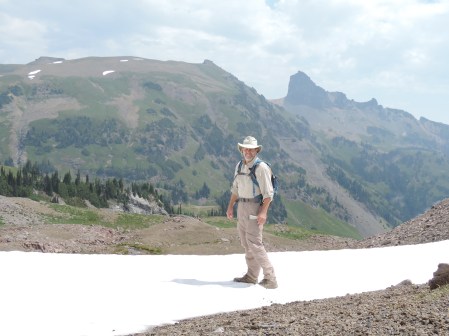
Miles: ~8.  Elevation gain: ~3900′

After a business trip to the Pantex site in Amarillo, TX, I drove about eight hours to the trailhead, northeast of Buena Vista, CO – a region I know and love.  Powerful storms rolled in as I turned on to the dirt road, 13 miles from the trailhead.  Lightning, rain and hail continued through the evening.  The last two miles are along a wickedly rough 4X4 ‘road’, made more difficult by the rain and darkness.  I didn’t even pitch my tent, sleeping in the truck instead.

Photos can be seen here: http://s44.photobucket.com/user/baypiper/library/Huron%20Peak?sort=3&page=1

I woke in darkness about 5 a.m., ate breakfast in the cold (the truck gate had frozen shut), packed the daypack, and made my way about .5 miles to the trailhead by dawn.  The weather had cleared and the sun came out as I began the climb through a sub-alpine forest. This section was an unbroken climb, mostly along switchbacks, with occasional views of mountains beyond.

After about three miles the trail transitioned above treeline, and after a short, steep climb entered a lovely alpine meadow studded with a single small lake.  The hike across the meadow was the only relatively flat stretch.

The trail exits the meadow and begins a sharp climb up a verdant wall to a saddle that connects Huron and its neighbor, Browns Peak.  After crossing the saddle, I came to the beginning of a long rocky ridge that climbs to the base of Huron.  The trail fades along the ridge, but navigation is easy: follow the ridge line as far as it goes.

The ridge eventually ends at the base of Huron’s rocky cone.  From here to the peak is a very steep scramble up loose talus.  The going is slow, and I had to backtrack or move horizontally two or three times when I came to an impassable mass of loose rocks.  (The descent down this talus was more precarious.)

I reached the summit before 1100 (target was noon, to be off before afternoon thunderstorms). The peak is wide and long enough to walk around and to find a place out of the wind to sit for lunch.  Views of mountains – including Elbert, Colorado’s highest peak – extend in every direction.  A brother and sister – 22 years apart! – joined me 20 minutes later.  They were wonderful company in that high, lonely place.

Mt Rainier National Park, Day 2 Hike

Loop: White River Campground to Sunrise; to Burroughs Mountain peak; to Glacier Basin and above; to campground

Miles: 12.5 (11.5 by trail according to topographical map; ~1 mile off trail)

Elevation gain: ~3300’ ascent, same for descent (4100’ at camp; 7402’ Burroughs Mt peak)

July 11, 2015

Photos viewable at (recommend selecting ‘slideshow’ option):

http://s44.photobucket.com/user/baypiper/library/Rainier%20NP%20Sunrise%20Burroughs%20Mt%20Glacier%20Basin?sort=2&page=1

Soon after returning to camp after the first day’s hike (see below), to Summerland/Panhandle Gap/Indian Bar, the weather changed.  That day had been mild and mostly clear.  Through the evening the temperatures cooled by about ten degrees and a light rain began to fall at dusk.  I was glad for it; I was hoping for a cool, damp relief from the Texas summer.

Fog and mist were prominent by morning; they would remain all day, for every section of trail.  I would have no views of mountain peaks, including Rainier itself; sight distance was rarely greater than 100 yards.  The only exception was a brief glimpse of Goat Island Mountain, across the White River, near the end of the hike, and this was only partial.  This disappointed me only for the ascent to Burroughs Mountain; for the remainder, I found that the fog caused me to pay attention to smaller, nearer objects, which I tend to slight.  I became entranced by the small, hardy flowers along the way, and the ethereal silhouettes of trees and rocks.

The trailhead began at the northwest corner of the White River Campground.  I began at 6:20 in the morning.  The trail immediately ascended sharply and continued to ascend at greater and lesser degrees for the four miles to Sunrise, one of the most famous stops in the park.  This section passes through unbroken forest.  All was quiet and still, and I saw no other person until Sunrise, where I met a few backpackers who had stopped for the night at the Sunrise camp.

The trail continued to climb above Sunrise camp to the trailhead up to Burroughs Mountain (actually two modest peaks).  This would be my favorite trail of the day.  The trailhead is already above treeline; a marker notes the alpine, Arctic-like environment along the trail, advising hikers to avoid damaging the fragile plants.

The first mile climbs steeply, along the rocky mountainside.  About one mile in I passed the first snowfield of the hike; it appeared slowly and ghost-like out of the fog.  For three miles the trail (very faint in places), winds to Burroughs peak, through a brilliant diversity of small alpine plants and flowers clinging among the loose rock surface.  The rugged, treeless slopes, fading into the gauzy fog, reminded me strongly of places I’ve seen in Scotland.

From the top of Burroughs Mountain the trail quickly began descending, continuing to do so to the base of the trail to Glacier Basin.  Once back below timberline, the underbrush was thick and lush; through several sections of trail my pants and shoes were soaked from walking through wet fields of low plants (thanks to an evening rain, my shoes didn’t dry out until the next morning and my feet were chilled until I crawled into the sleeping bag that night).  Most of the elevation from the long climb was given through a long series of short, steep switchbacks.  Mid-way through these I came upon a pair of young black-tail deer; I encountered them for 15 minutes: as they moved straight down the mountain I would catch up to them mid-way through the switchbacks.

The .6 mile trail to Glacier Basin was steep and unremarkable.  Glacier Basin is a high point overlooking the InterGlacier Fork of the White River, which rushes through a broad, rugged valley of moraine left by Emmons Glacier, the largest glacier in the lower 48 states.  I continued above the basin for more than half a mile, hoping to reach Mount Ruth, but the fog and rain made navigation difficult  (I saw no trail, so was bushwhacking) and without much merit.

I walked leisurely (a wonderful change of pace!) for the last four miles, a pleasant descent on a wide, clear trail from Glacier Basin to the campground.  With a few hours of daylight left, and this being my last full day in the park, I enjoyed what was the most lush section of any trail I saw during my visit, passing as it does through one of the few temperate rain forests of the world.  The trail crossed at least two dozen streams, many falling through rock and undergrowth carpeted by moss and fern.

For a second consecutive day, I had hiked through some of the most remarkable and rapid transitions in climate and environment – forest to alpine to rain forest – that I have ever experienced.  Over coffee and a hot dinner, I thought fondly back over the day.

Mt Rainier National Park: Summerland/Panhandle Gap trail


72 snowfield on Indian Bar trail

NOTE: this report accompanies photos available for viewing at the following Web site.  There are 132 photos; I recommend using the ‘slideshow’ function.

http://s44.photobucket.com/user/baypiper/library/Rainier%20NP%20Summerland%20and%20Panhandle%20Gap%20hike?sort=2&page=1

Following business in Washington state, I was fortunate to spend the weekend of July 10-12 in Mt Rainier National Park, my first visit to that park.  The preeminent trail there is the famous Wonderland Trail, 93 miles around the great mountain.  After studying trail options, I first decided to backpack the Northern Loop trail, a 36 mile hike northwest of Rainier.  However, advice from members of a hiker forum convinced me to camp at the White River campground, near the Sunrise section of the park, and take day-hikes from there.  This offered a few important advantages: I could see a more diverse section of the park, and could travel faster without a full backpack.  This was a good decision; the campground, at about 4100 feet elevation, is near important trailheads and is shaded by heavy forest; several creeks ran through it, and Rainier is visible from sections of the campground.

For my first day hike, I chose a portion of the Wonderland Trail: to the Summerland meadow, to Panhandle Gap above that, and to Indian Bar and Ohanapecosh Park (meadow) beyond that.  An out-and-back trail, the total distance was about 17 trail miles; I added another mile or two with two off-trail scrambles, to the tops of Meany Crest and another unnamed small peak.  The trail is a largely unbroken ascent on the way out, descending on the return.  Highest elevation gained was about 7700’, for roughly a 3600’ ascent and the same on return. I entered the trailhead at 0630 and came out at 3:30 that afternoon.  I saw only one other hiker beyond Summerland – a backpacker hiking the Wonderland Trail – until returning past Summerland, where I passed several people going up to Summerland.  Thus, I had the best part of the trail – to Panhandle Gap, Meany Crest and beyond – to myself.

From the trailhead to Summerland is 4.2 miles through forest dominated by tall Douglas fir, with sections of dense underbrush .  This is a popular trail, and most of it is a wide and well-trodden dirt path. Several times it crosses Fryingpan Creek, whose headwaters I would later reach and which is a rushing river by the time it reaches the trailhead.  This section is lush, quiet and peaceful.  Until a length of steep switchbacks approaching Summerland, the trail is a mostly gentle ascent.

Summerland, a mix of forest and sub-alpine meadow, is a popular destination; a small three-sided shelter makes it a welcome camp for Wonderland backpackers.  Though beautiful, I found it less impressive than expected.  The remainder of the hike I found far more remarkable.

The first mile beyond Summerland took me through the transition from sub-alpine meadow, to treeline and high, thin rocky meadow of alpine vegetation, to partially glaciated and moraine-covered alpine zone.  This is the section to Panhandle Gap and on the Indian Bar, my destination for the day.

To the crossing of the upper Fryingpan Creek, just below its glacier headwaters, the trail narrows but is easily followed. It passes near Fryingpan Glacier, tucked within a steep cirque, and several large snowfields, one of which feeds a small lake which, being still unnamed, I dubbed, in honor of my parents, MurrGil Lake.

Beyond the creek crossing the trail begins a sharper ascent, passing mostly through rock and moraine.  A few passages were marked with rock cairns, but much of it was scarcely traceable; I spotted far above me what I believed to be Panhandle Gap – a smooth sloping saddle between a peak trimmed in andesite columns and Meany Crest – and bushwhacked my way up to Panhandle Gap.  As I ascended, views of Mt Rainier and the sharp peak of Little Tahoma grew grander, until the glacier-covered slopes of Rainier were clearly visible.  (This would be the only day of the weekend clear enough to view the full Rainier cone.)

From the gap, the view is unbroken in all directions.  I could even see the Cascade range in the distance.  Instead of immediately continuing to Indian Bar, I chose to climb Meany Crest, a sharp ridge that climbs north from the gap.  The first several hundred yards were marked with a slight dirt trail; beyond that was an unmarked scramble across rock and scree to an edge that rose above Fryingpan glacier, MurrGil Lake, and looking out across Summerland far below.  Though treacherous in a few places, I found this to be the highlight of the day, with views unmatched by anything I saw all weekend.

Returning to the gap, I continued on the Wonderland Trail section to Indian Bar, another backcountry stop for backpackers.  The way is entirely through an alpine zone, dotted with snowfields, alpine flowers clinging to the ground, and expansive view.  About half way to Indian Bar, I spotted two herds of mountain goats loitering in a series of snowfields.

Upon reaching Indian Bar, a pretty but unremarkable spot, I returned the way I came.

Texas gold

Bring it home!  The TX legislature approved plans to repatriate gold bullion (actually owned by the state university endowment, I believe) from the HSBC bank in NYC to a repository in Texas.

http://www.bloomberg.com/news/articles/2015-06-19/there-s-a-pile-of-gold-in-manhattan-texas-wants-it-back-

Why the heck not?  This isn’t a major issue, but the gold could be more advantageous here than in an out-of-state bank.

Only a handful of legislatures – all Democrat, of course – voted against the measure.  One of them gave a reason that made about as much sense – and was more honest – than most reasons Democrats oppose anything.

“Kirk Watson was one of four Democrats in the Senate to go the other way. Why? “Cause it’s weird,” he said.”