
On the winds of our first Gulf storm of the season arrived the Hurricane Bird. I spotted six of them soaring high over my house at dawn. Word spread quickly along the shore; before 0800 neighbors Chris and Jessica texted to say they had counted 18.
We haven’t seen them since August of last year, when they arrived with another storm, hurricane Harvey. We’ve seen them during other storms in my years on the bay – Ike, Rita, Alison – as I’m sure they’ve been seen during storms since the Karankawas first wandered to this coast. As with those storms, they will be gone when the winds calm. They are pelagic by nature, and the open sea draws them away.
Hurricane Bird is just a nickname, known today mostly only by old-timers like me. Their true name – and no bird more deserves such a grand name – is Magnificent Frigatebird.
Frigate, because they “can take food directly from the bill of another bird in an aerial battle. Because of their swift, soaring flight and marauding behavior, Magnificent Frigatebirds were named after British frigate warships.”
Magnificent, because…well, because they simply are.
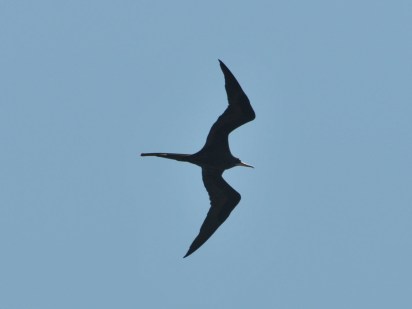
If you’ve seen one, you understand. They are so beautiful and distinctive that the Texas Pelagics birding group, which for all other species identifies other birds with similar characteristics, says they have, in effect, no equal: “Similar Species: With long sharp-angled black wings and long forked tail, Magnificent Frigatebird is unmistakable.”
Houston Audubon makes similar praise: “the Magnificent Frigatebird is instantly recognizable even at long distances. The bird has a 7.5 foot wingspan; relative to its body weight, the Magnificent Frigatebird has the largest wing surface area of any bird alive.”
They are masterpieces of flight. They can glide and soar for up to two months without setting down; rise to a height of 2.5 miles; glide for 35 miles without beating a wing. They sleep on the wing, sometimes for periods as brief as ten seconds and always while they are rising to gain altitude.
Pelagic they certainly are, but they are not birds of the water. For a creature that spends most of its life over the open ocean, water can kill them. Their feathers are not waterproof. They fly almost without cease because “they couldn’t take a break even if they wanted to; unlike most other seabirds, frigatebirds can’t swim, becoming waterlogged and eventually drowning if they do encounter water.”
They are visitors only here on Galveston Bay. But while they are with us, they fill us shoreliners with excitement and joy. We don’t know when they will arrive; we don’t know how long they will stay; we don’t know when they will leave. In this, they are like grace.
But while they are here, may they find welcome and rest. Like old friends long unseen, I hope they stick around for a while.
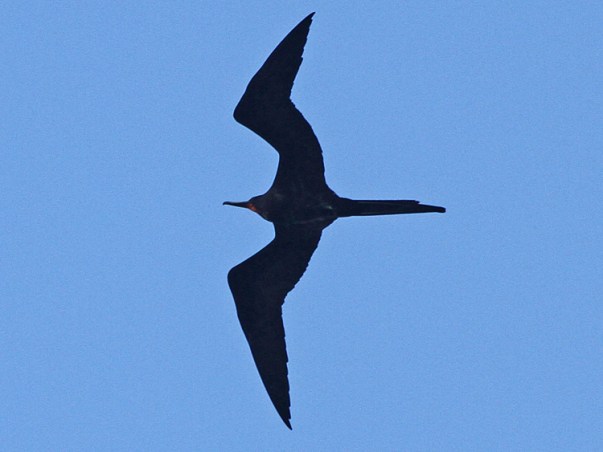
(There are more beautiful photos of the frigatebird, but this aspect, like a silhouette high above us, is almost the only way we ever see it, and is how we know it.)
 tejaslibertas