Monthly Archives: July 2015

Mt Rainier National Park, Day 2 Hike

Loop: White River Campground to Sunrise; to Burroughs Mountain peak; to Glacier Basin and above; to campground

Miles: 12.5 (11.5 by trail according to topographical map; ~1 mile off trail)

Elevation gain: ~3300’ ascent, same for descent (4100’ at camp; 7402’ Burroughs Mt peak)

July 11, 2015

Photos viewable at (recommend selecting ‘slideshow’ option):

http://s44.photobucket.com/user/baypiper/library/Rainier%20NP%20Sunrise%20Burroughs%20Mt%20Glacier%20Basin?sort=2&page=1

Soon after returning to camp after the first day’s hike (see below), to Summerland/Panhandle Gap/Indian Bar, the weather changed.  That day had been mild and mostly clear.  Through the evening the temperatures cooled by about ten degrees and a light rain began to fall at dusk.  I was glad for it; I was hoping for a cool, damp relief from the Texas summer.

Fog and mist were prominent by morning; they would remain all day, for every section of trail.  I would have no views of mountain peaks, including Rainier itself; sight distance was rarely greater than 100 yards.  The only exception was a brief glimpse of Goat Island Mountain, across the White River, near the end of the hike, and this was only partial.  This disappointed me only for the ascent to Burroughs Mountain; for the remainder, I found that the fog caused me to pay attention to smaller, nearer objects, which I tend to slight.  I became entranced by the small, hardy flowers along the way, and the ethereal silhouettes of trees and rocks.

The trailhead began at the northwest corner of the White River Campground.  I began at 6:20 in the morning.  The trail immediately ascended sharply and continued to ascend at greater and lesser degrees for the four miles to Sunrise, one of the most famous stops in the park.  This section passes through unbroken forest.  All was quiet and still, and I saw no other person until Sunrise, where I met a few backpackers who had stopped for the night at the Sunrise camp.

The trail continued to climb above Sunrise camp to the trailhead up to Burroughs Mountain (actually two modest peaks).  This would be my favorite trail of the day.  The trailhead is already above treeline; a marker notes the alpine, Arctic-like environment along the trail, advising hikers to avoid damaging the fragile plants.

The first mile climbs steeply, along the rocky mountainside.  About one mile in I passed the first snowfield of the hike; it appeared slowly and ghost-like out of the fog.  For three miles the trail (very faint in places), winds to Burroughs peak, through a brilliant diversity of small alpine plants and flowers clinging among the loose rock surface.  The rugged, treeless slopes, fading into the gauzy fog, reminded me strongly of places I’ve seen in Scotland.

From the top of Burroughs Mountain the trail quickly began descending, continuing to do so to the base of the trail to Glacier Basin.  Once back below timberline, the underbrush was thick and lush; through several sections of trail my pants and shoes were soaked from walking through wet fields of low plants (thanks to an evening rain, my shoes didn’t dry out until the next morning and my feet were chilled until I crawled into the sleeping bag that night).  Most of the elevation from the long climb was given through a long series of short, steep switchbacks.  Mid-way through these I came upon a pair of young black-tail deer; I encountered them for 15 minutes: as they moved straight down the mountain I would catch up to them mid-way through the switchbacks.

The .6 mile trail to Glacier Basin was steep and unremarkable.  Glacier Basin is a high point overlooking the InterGlacier Fork of the White River, which rushes through a broad, rugged valley of moraine left by Emmons Glacier, the largest glacier in the lower 48 states.  I continued above the basin for more than half a mile, hoping to reach Mount Ruth, but the fog and rain made navigation difficult  (I saw no trail, so was bushwhacking) and without much merit.

I walked leisurely (a wonderful change of pace!) for the last four miles, a pleasant descent on a wide, clear trail from Glacier Basin to the campground.  With a few hours of daylight left, and this being my last full day in the park, I enjoyed what was the most lush section of any trail I saw during my visit, passing as it does through one of the few temperate rain forests of the world.  The trail crossed at least two dozen streams, many falling through rock and undergrowth carpeted by moss and fern.

For a second consecutive day, I had hiked through some of the most remarkable and rapid transitions in climate and environment – forest to alpine to rain forest – that I have ever experienced.  Over coffee and a hot dinner, I thought fondly back over the day.
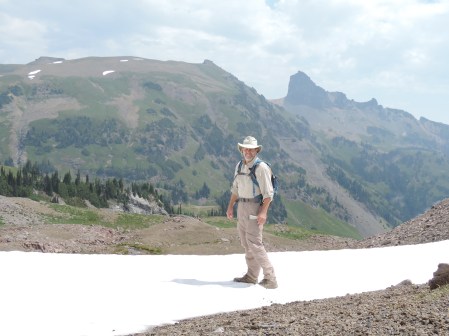
Mt Rainier National Park: Summerland/Panhandle Gap trail


72 snowfield on Indian Bar trail

NOTE: this report accompanies photos available for viewing at the following Web site.  There are 132 photos; I recommend using the ‘slideshow’ function.

http://s44.photobucket.com/user/baypiper/library/Rainier%20NP%20Summerland%20and%20Panhandle%20Gap%20hike?sort=2&page=1

Following business in Washington state, I was fortunate to spend the weekend of July 10-12 in Mt Rainier National Park, my first visit to that park.  The preeminent trail there is the famous Wonderland Trail, 93 miles around the great mountain.  After studying trail options, I first decided to backpack the Northern Loop trail, a 36 mile hike northwest of Rainier.  However, advice from members of a hiker forum convinced me to camp at the White River campground, near the Sunrise section of the park, and take day-hikes from there.  This offered a few important advantages: I could see a more diverse section of the park, and could travel faster without a full backpack.  This was a good decision; the campground, at about 4100 feet elevation, is near important trailheads and is shaded by heavy forest; several creeks ran through it, and Rainier is visible from sections of the campground.

For my first day hike, I chose a portion of the Wonderland Trail: to the Summerland meadow, to Panhandle Gap above that, and to Indian Bar and Ohanapecosh Park (meadow) beyond that.  An out-and-back trail, the total distance was about 17 trail miles; I added another mile or two with two off-trail scrambles, to the tops of Meany Crest and another unnamed small peak.  The trail is a largely unbroken ascent on the way out, descending on the return.  Highest elevation gained was about 7700’, for roughly a 3600’ ascent and the same on return. I entered the trailhead at 0630 and came out at 3:30 that afternoon.  I saw only one other hiker beyond Summerland – a backpacker hiking the Wonderland Trail – until returning past Summerland, where I passed several people going up to Summerland.  Thus, I had the best part of the trail – to Panhandle Gap, Meany Crest and beyond – to myself.

From the trailhead to Summerland is 4.2 miles through forest dominated by tall Douglas fir, with sections of dense underbrush .  This is a popular trail, and most of it is a wide and well-trodden dirt path. Several times it crosses Fryingpan Creek, whose headwaters I would later reach and which is a rushing river by the time it reaches the trailhead.  This section is lush, quiet and peaceful.  Until a length of steep switchbacks approaching Summerland, the trail is a mostly gentle ascent.

Summerland, a mix of forest and sub-alpine meadow, is a popular destination; a small three-sided shelter makes it a welcome camp for Wonderland backpackers.  Though beautiful, I found it less impressive than expected.  The remainder of the hike I found far more remarkable.

The first mile beyond Summerland took me through the transition from sub-alpine meadow, to treeline and high, thin rocky meadow of alpine vegetation, to partially glaciated and moraine-covered alpine zone.  This is the section to Panhandle Gap and on the Indian Bar, my destination for the day.

To the crossing of the upper Fryingpan Creek, just below its glacier headwaters, the trail narrows but is easily followed. It passes near Fryingpan Glacier, tucked within a steep cirque, and several large snowfields, one of which feeds a small lake which, being still unnamed, I dubbed, in honor of my parents, MurrGil Lake.

Beyond the creek crossing the trail begins a sharper ascent, passing mostly through rock and moraine.  A few passages were marked with rock cairns, but much of it was scarcely traceable; I spotted far above me what I believed to be Panhandle Gap – a smooth sloping saddle between a peak trimmed in andesite columns and Meany Crest – and bushwhacked my way up to Panhandle Gap.  As I ascended, views of Mt Rainier and the sharp peak of Little Tahoma grew grander, until the glacier-covered slopes of Rainier were clearly visible.  (This would be the only day of the weekend clear enough to view the full Rainier cone.)

From the gap, the view is unbroken in all directions.  I could even see the Cascade range in the distance.  Instead of immediately continuing to Indian Bar, I chose to climb Meany Crest, a sharp ridge that climbs north from the gap.  The first several hundred yards were marked with a slight dirt trail; beyond that was an unmarked scramble across rock and scree to an edge that rose above Fryingpan glacier, MurrGil Lake, and looking out across Summerland far below.  Though treacherous in a few places, I found this to be the highlight of the day, with views unmatched by anything I saw all weekend.

Returning to the gap, I continued on the Wonderland Trail section to Indian Bar, another backcountry stop for backpackers.  The way is entirely through an alpine zone, dotted with snowfields, alpine flowers clinging to the ground, and expansive view.  About half way to Indian Bar, I spotted two herds of mountain goats loitering in a series of snowfields.

Upon reaching Indian Bar, a pretty but unremarkable spot, I returned the way I came.

Texas gold

Bring it home!  The TX legislature approved plans to repatriate gold bullion (actually owned by the state university endowment, I believe) from the HSBC bank in NYC to a repository in Texas.

http://www.bloomberg.com/news/articles/2015-06-19/there-s-a-pile-of-gold-in-manhattan-texas-wants-it-back-

Why the heck not?  This isn’t a major issue, but the gold could be more advantageous here than in an out-of-state bank.

Only a handful of legislatures – all Democrat, of course – voted against the measure.  One of them gave a reason that made about as much sense – and was more honest – than most reasons Democrats oppose anything.

“Kirk Watson was one of four Democrats in the Senate to go the other way. Why? “Cause it’s weird,” he said.”

Clothes and the man

Tonight I’ll indulge my grumpy old man impulse…

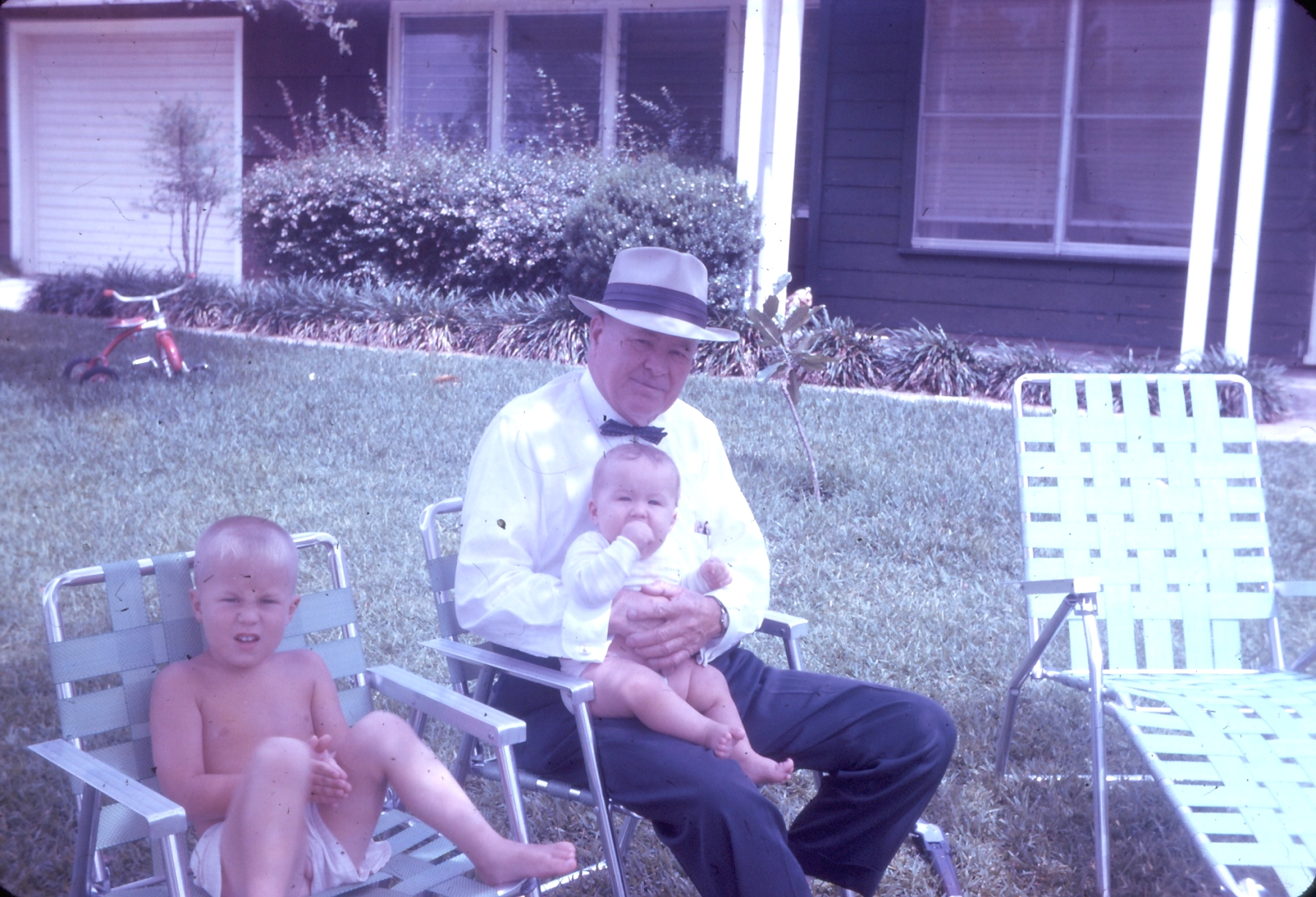
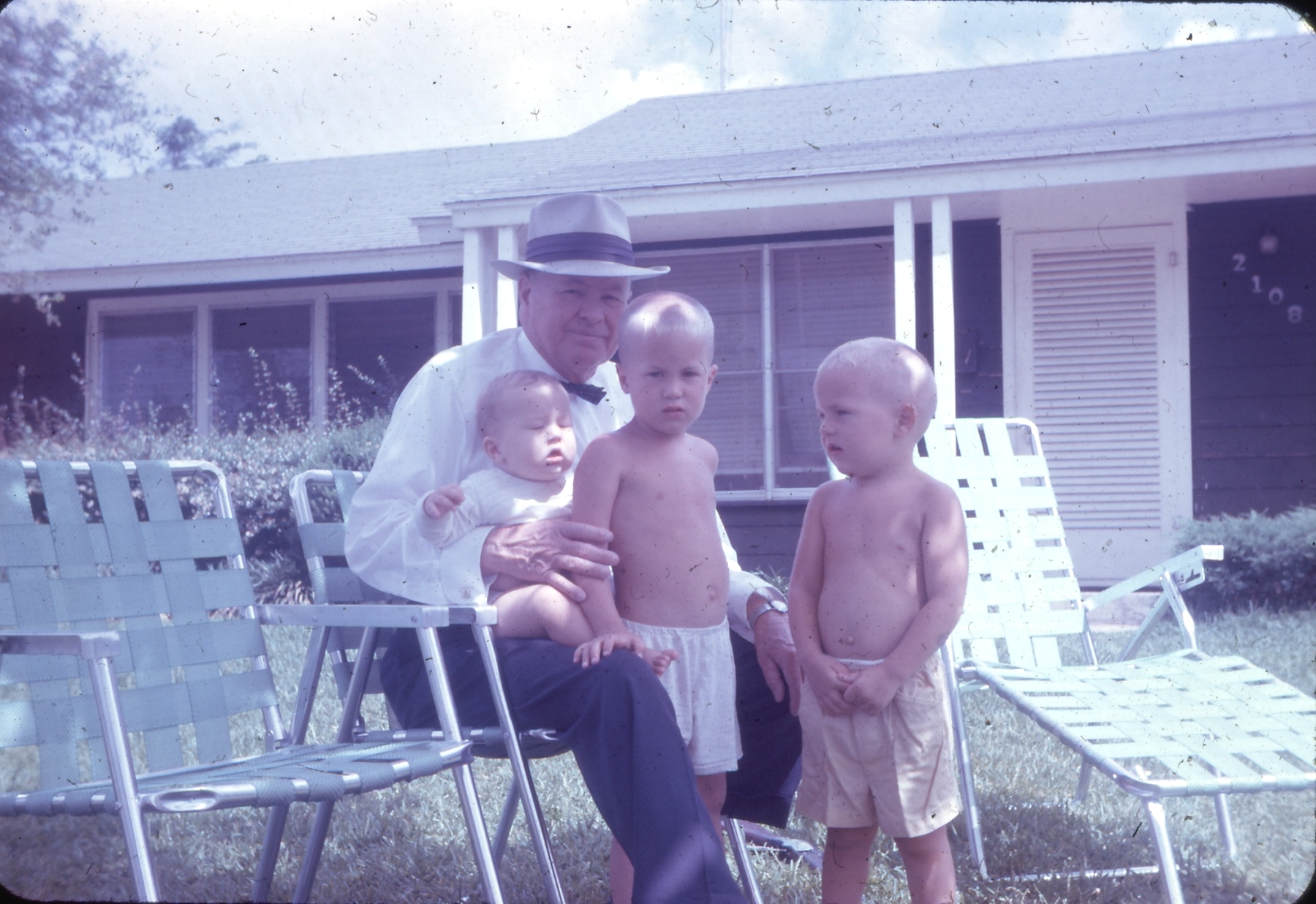
As I travel, or go out to public places, I am often reminded of my maternal grandfather.  He was a grand and dignified man.  He served in the Navy through both world wars, raised five children on nothing more than the salary of a postal carrier in tiny Stratton, Nebraska, and was kind, generous and strong.  He told long, funny stories, not cheap jokes.  He was gentle with children and animals.

But I think of him these days because of the way he dressed.  Though money was tight, he lived his life without air conditioning, and he spent much of his life outside (he taught me to fish and to catch frogs) he clothed himself like a grown man: white button-down shirt, pressed khaki pants, bow tie, and, when outside, a modest fedora.  Even on casual outings on summer days, he dressed like this, like a man who respected himself.  Below are two photos of him with my brothers and I, on a June afternoon in Texas, in the yard of the house where I grew up.  That was my Popo, handsome and mature.

So when I see grown men dressed in baggy gym shorts, tank tops and flip-flops, in airports and grocery stores, I think of Popo.  They are juveniles with five-o’clock shadows, tacky and sloppy. They cannot hold a candle to my grandfather.  He was a man.  I miss him.  I am glad there is some of him in me.

Popo holding Kevin Eddie in lawn chairs 6.61 Popo Kevin Eddie Rush sitting in front yard summer 61

Since We’re On the Subject of Civil Rights…

As a result of the Supreme Court’s decision, those 14 states which forbid gay marriage must now allow it.  I support this, since I want no government to hold the power to tell me or any other citizen who we may or may not marry.

All well and good.  But another 14 states (listed below) refuse to recognize my right, emphasized by a license issued by the state of Texas, to carry a handgun.  The Constitution neither names nor addresses marriage; the right to marry had to be gleaned by the court by intent.  The right to bear arms, however, could not be more explicitly recognized by the Constitution: the second amendment added to it declares that right in the clearest of terms.

From those who supported the court’s decision on gay marriage, I look forward to equally energetic support for the riddance of those laws which deny the right granted to me and all citizens by the Second Amendment.  Unfortunately, the 14 states are largely governed by the left, and I have no faith that those on the left will honor or even recognize such fairness.

In the meantime, I will not comply with the laws of these states, city and territory which deny this right:

California, Connecticut, Hawaii, Illinois, Maine, Maryland, Massachusetts, Nevada, New Hampshire, New Jersey, New York, Oregon, Puerto Rico, Rhode Island, Washington, District of Columbia.

After Some Consideration…

Though a Christian, with right-leaning political views, I do not oppose gay marriage.  I have given it much thought, but cannot form any opposition that withstands the scrutiny I apply to any other political or social issue.  Namely: does it harm me?  No.  Does it lessen my liberties?  None that I can see.  Does it impose burdens or costs on me?  No, it does not.  I see no actual harm that it does to any citizen, nor can I detect any cost that it lays on any citizen.  Thus, it only works to expand liberty.

These are the most important criteria that I apply to any issue.  They are my touchstones, not the dictates or opinions of any political party, group or creed.  Words or actions that fail these criteria, I will oppose, whether they come from the left or the right.  Words or actions which pass these criteria, I will, at the least, not oppose, thought I may also not lend active support.

Furthermore, I can find no word or deed of Jesus Christ that even implies that we treat homosexuals in any way other than how we treat all others.  Paul may have made such statements, but I am a Christian, not a Paulian.  Christ said that His two most important instructions to us were to love God, and to love others.  He placed no qualifications on either.

Furthermore yet, I would like to see government, at all levels, withdraw itself from all regulation and oversight of marriage.  Government has no business there, and we should oppose its presence in such personal areas of our lives.

Triskit

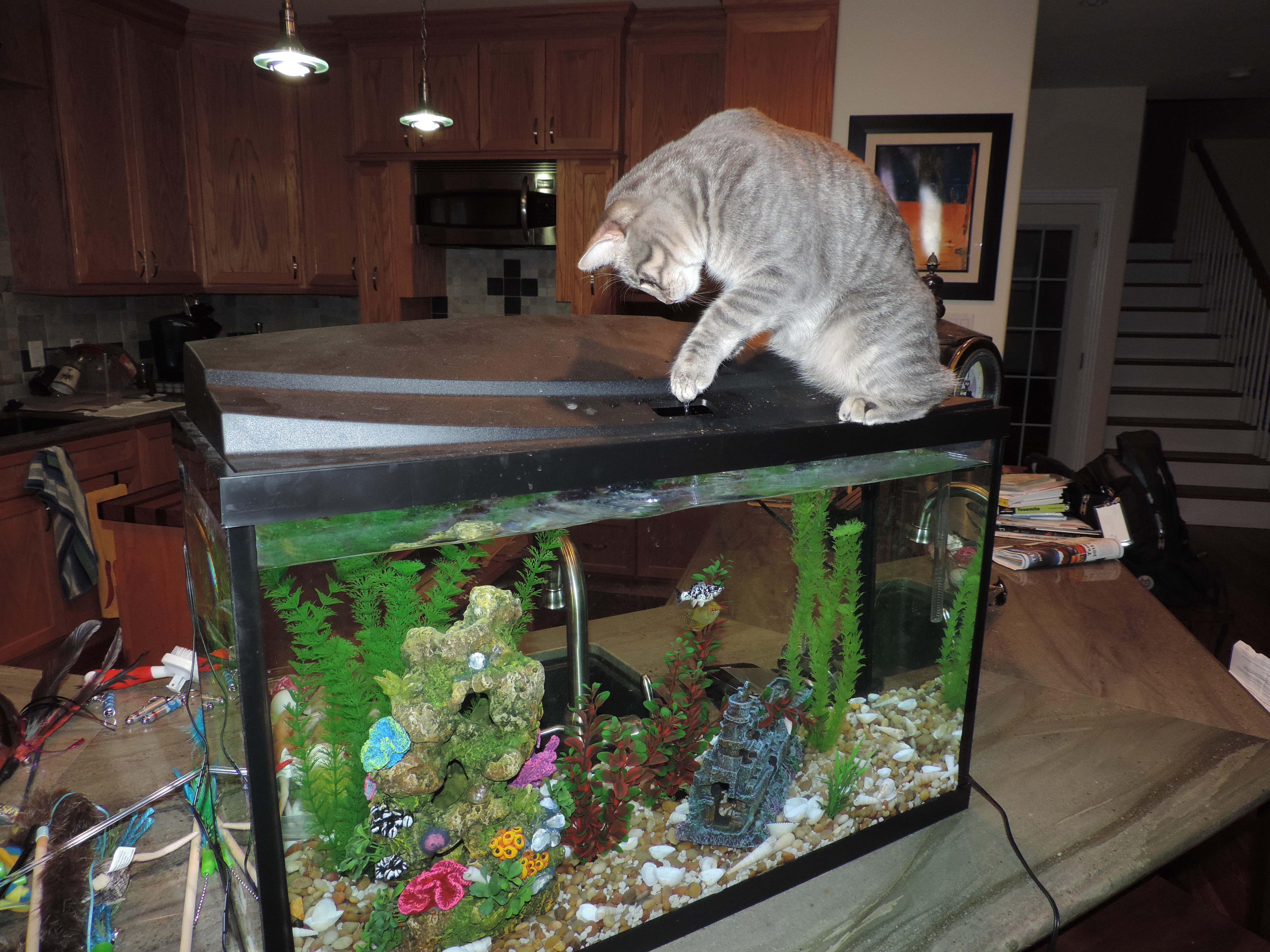
My three-legged cat continues to amaze me.  She has learned how to climb to the kitchen island counter, and from there to the top of the aquarium, where she dip a paw into the water.  I’ve grown very fond of this little cat.  Though she’s an adult cat, a friend says she still has the face of a kitten.

DSCN1756